


BADAS TB Initiative Program
BADAS TB Initiative Program
Tuberculosis and diabetes mellitus are two major public health concerns in Bangladesh. When these two diseases occur together, they create additional challenges for diagnosis, treatment, follow-up, and patient care. Diabetes increases the risk of developing tuberculosis, while tuberculosis may worsen glycaemic control and complicate diabetes management. In a country where both conditions are common, an integrated service approach is essential.
The BADAS TB Initiative Program was developed by the Diabetic Association of Bangladesh to address this dual burden through the BADAS-affiliated diabetes care network. Since 2013, BADAS has worked closely with the National Tuberculosis Control Program and development partners to strengthen the early identification of TB among people with diabetes, improve referral linkage, and build healthcare providers' capacity to care for TB-DM comorbidities.
Key Achievements
Since its inception, the BADAS TB Initiative Program has made a substantial contribution to TB-DM comorbidity control in Bangladesh. The program has supported large-scale screening, presumptive TB identification, diagnostic referral, treatment linkage, and health workforce orientation through the BADAS-affiliated network.
Indicator |
Achievement |
Total screening |
6,417,097 |
Presumptive TB identified and tested |
254,739 |
Diagnosed TB cases |
23,925 |
Put on treatment |
23,652 |
Doctors and other health workers oriented/trained |
9,612 |
Objectives
• To reduce the dual burden of tuberculosis and diabetes through early case detection, referral, and management support.
• To strengthen the capacity of doctors, nurses, and allied health workers in TB-DM diagnosis and case management.
• To improve awareness among people with diabetes, their families, and the wider community regarding TB-DM comorbidity.
Major Activities
Activity area |
Description |
Active TB screening |
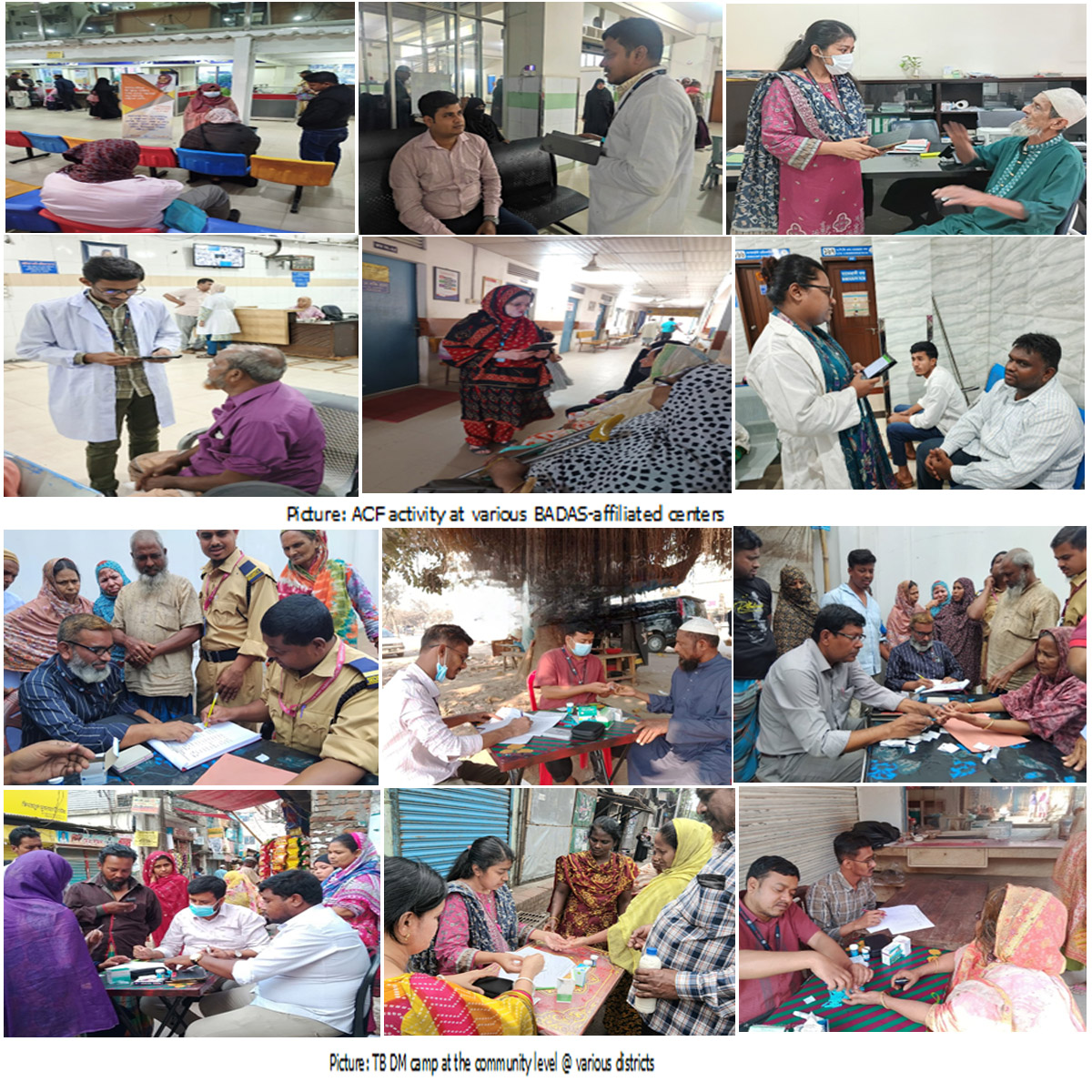
Screening of patients attending BADAS-affiliated diabetic care centers. |
Referral linkage |
Referral of presumptive TB cases to NTP-linked DOTS and diagnostic facilities. |
TB-DM case management support |
Clinical evaluation and referral support through center-level physicians. |
GeneXpert support |
Diagnostic support through BIRDEM General Hospital. |
Digital reporting |
TAB-based active screening and online reporting for better supervision and data quality. |
Capacity building |
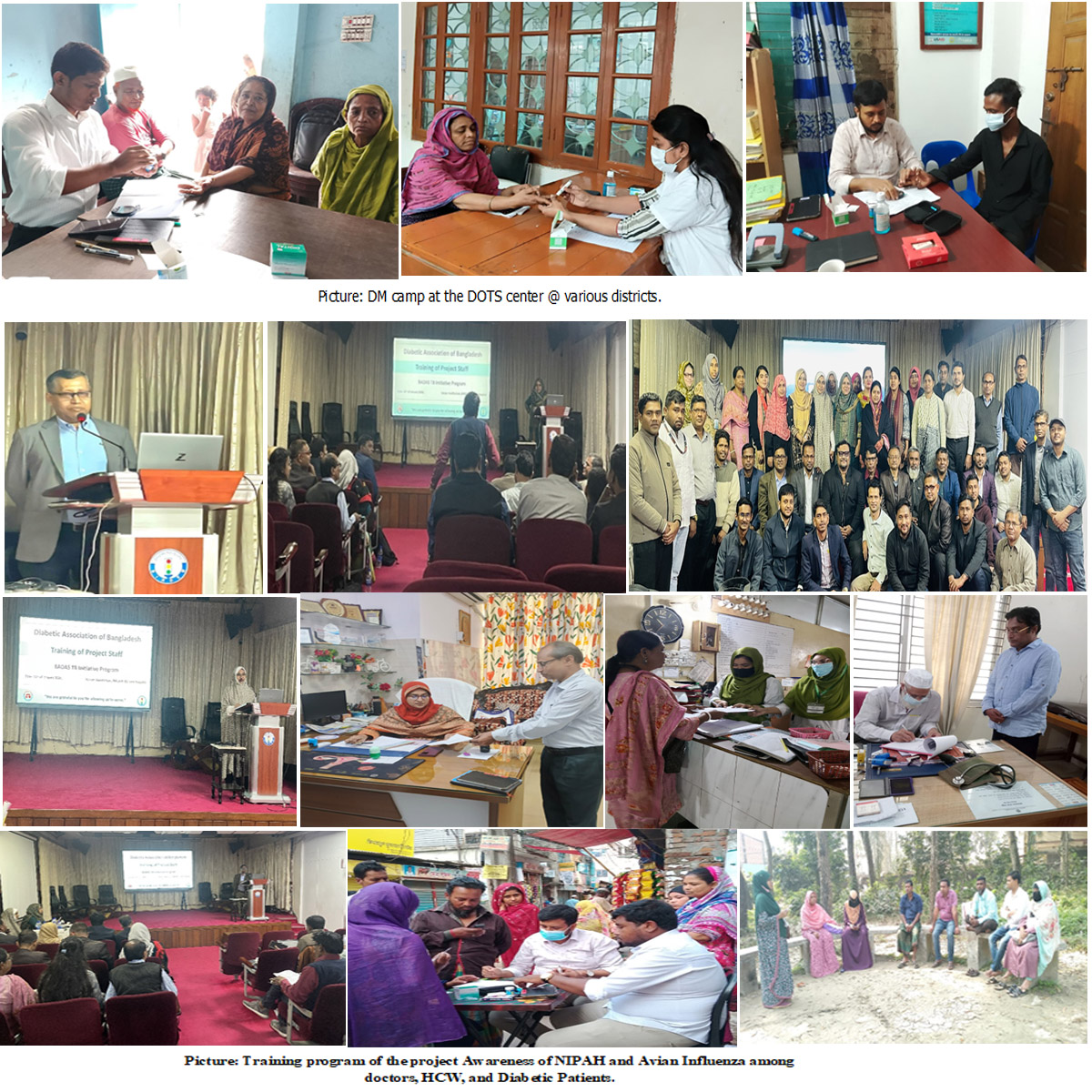
Training and orientation of doctors, nurses, field staff, and allied health professionals. |
Community activity |
Diabetic camps among TB patients and community-level TB-DM screening activities. |
Coordination and supervision |
Coordination with NTP, DOTS centers, and partner organizations, with field monitoring and corrective support. |
Research and documentation |
Evidence generation, publication support, and documentation on TB-DM comorbidity. |
Working Area and National Footprint
The BADAS TB Initiative Program has been implemented through the Diabetic Association of Bangladesh's extensive service network.
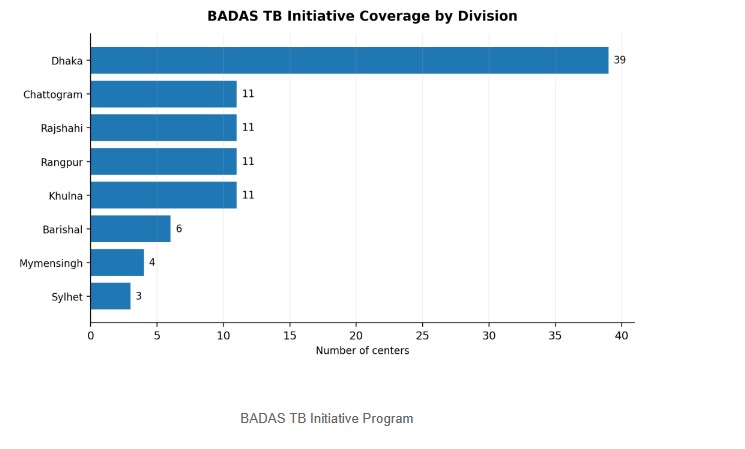
The program covers 96 BADAS-affiliated centers in 59 districts, with representation across all major divisions of the country.
Dhaka division has the largest number of covered centers, while the remaining divisions reflect BADAS's presence across the wider affiliated network located in districts.
Program Performance across Project Phases
The BADAS TB Initiative has been strengthened through successive project phases, including TB Care II, Challenge TB, and ACTB. These phases helped institutionalize active TB screening within diabetes care settings and contributed to case detection, referral linkage, and capacity building.
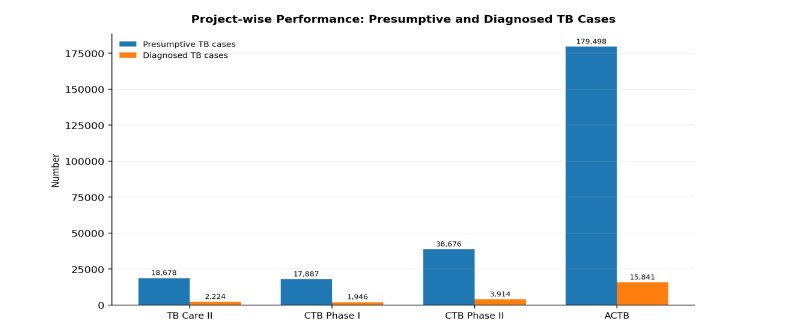
The ACTB phase contributed the most presumptive and diagnosed TB cases among the project phases shown.
Project |
Presumptive TB cases |
Diagnosed TB cases |
TB Care II |
18,678 |
2,224 |
CTB Phase I |
17,887 |
1,946 |
CTB Phase II |
38,676 |
3,914 |
ACTB |
179,498 |
15,841 |
TB-DM Comorbidity Focus
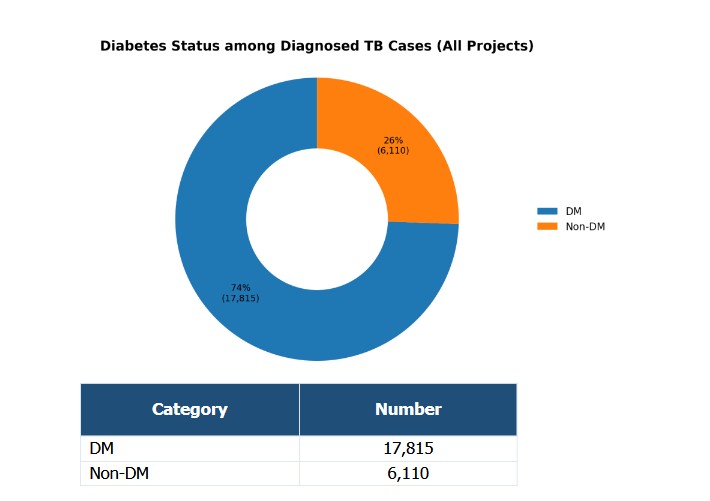
A major strength of the BADAS TB Initiative is its focus on people with diabetes, who require careful attention for TB symptoms, timely referral, and coordinated care. The program data show that a substantial proportion of diagnosed TB cases were among people with diabetes, reinforcing the relevance of TB screening within diabetes service delivery.
Current Implementation
Under the current Life-Saving Facility and Community-Based Service Delivery Support Project, BADAS is implementing active TB screening through 28 affiliated diabetic care centers across 20 districts. The current model integrates TB symptom screening into diabetes service delivery, uses digital reporting to improve data quality, and maintains referral linkage with NTP-linked laboratories and DOTS service providers for testing, diagnosis, treatment initiation, and follow-up.
Current TB Screening Cascade, January-March 2026
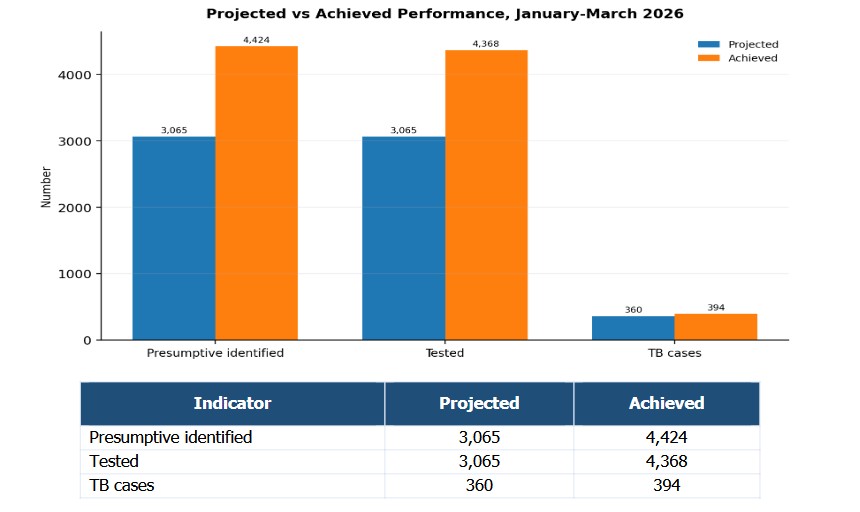
During the January-March 2026 reporting period, BADAS screened 142,266 patients for tuberculosis. Among them, 4,424 presumptive TB cases were identified; 4,368 underwent diagnostic testing; 394 TB cases were detected; and 392 patients were started on treatment.
Cascade indicator |
Achievement |
Screened |
142,266 |
Presumptive identified |
4,424 |
Tested |
4,368 |
TB cases detected |
394 |
Put on treatment |
392 |
Projected versus Achieved Performance, January-March 2026
The current project performance exceeded the projected target for presumptive identification, testing, and TB case detection during January-March 2026.
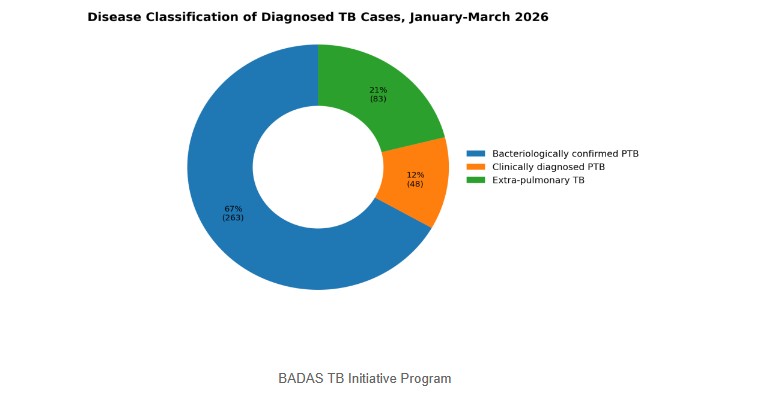
Disease Classification of Diagnosed TB Cases
Among the TB cases detected during January-March 2026, bacteriologically confirmed pulmonary TB was the predominant category, followed by extrapulmonary TB and clinically diagnosed pulmonary TB. The direct involvement of physicians at the center level supported clinical evaluation and appropriate referral.
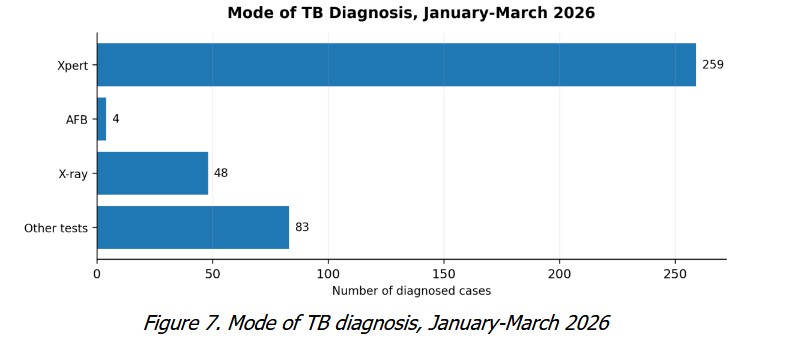
Mode of TB Diagnosis
During January-March 2026, Xpert was the main mode of TB diagnosis among diagnosed cases, followed by other tests, X-ray, and AFB. The role of GeneXpert and referral-linked diagnostics remains important for timely and reliable TB detection.
GeneXpert Service at BIRDEM
GeneXpert service at BIRDEM General Hospital has been an important diagnostic support component of the BADAS TB Initiative. The service was originally introduced under the USAID-funded TB Care II project and resumed operations in June 2023. During January-March 2026, 1,457 presumptive TB cases were tested through GeneXpert at BIRDEM, of whom 69 were diagnosed with TB.
Research and Evidence Generation
The BADAS TB Initiative Program has supported research and publication on TB-DM comorbidity in Bangladesh. These studies have provided evidence on active TB case-finding among people with diabetes, diabetes screening among people accessing TB diagnostics, TB prevalence among patients with diabetes, and the impact of an integrated TB-DM healthcare model. Through these efforts, BADAS has helped demonstrate that diabetes care platforms can play a meaningful role in TB detection, referral, patient education, and comorbidity management.
Year |
Publication title |
Journal / Type |
DOI / Link |
2026 |
Impact of an integrated TB–diabetes mellitus health care model |
The International Journal of Tuberculosis and Lung Disease, 30(5), 228–230 |
10.5588/ijtld.25.0607 |
2024 |
Effects of diabetes mellitus on retreatment of tuberculosis: A multi-centered case-control study from Bangladesh |
Journal of Clinical Tuberculosis and Other Mycobacterial Diseases, 36, 100450 |
10.1016/j.jctube.2024.100450 |
2022 |
TB prevalence among patients with diabetes in Bangladesh |
The International Journal of Tuberculosis and Lung Disease, 26(2), 119–125 |
10.5588/ijtld.21.0412 |
2021 |
Usefulness of GeneXpert MTB/RIF in the diagnosis of extra-pulmonary tuberculosis |
BIRDEM Medical Journal, 11(2), 121–124 |
10.3329/birdem.v11i2.53132 |
2020 |
A public-private model to scale up diabetes mellitus screening among people accessing tuberculosis diagnostics in Dhaka, Bangladesh |
International Journal of Infectious Diseases, 92, 56–61 |
10.1016/j.ijid.2020.01.001 |
2019 |
Active tuberculosis case finding among diabetic patients: Bangladesh program experience |
Journal of Infectious Diseases and Diagnosis, 4(124), 2 |
10.4172/2576-389X.1000124 |
2017 |
Knowledge, attitude, and practice regarding tuberculosis among diabetic patients |
BIRDEM Medical Journal, 7(2), 127–131 |
10.3329/birdem.v7i2.32450 |
2017 |
Rifampicin-induced acute interstitial nephritis and exfoliative dermatitis complicating a pulmonary tuberculosis case report |
BIRDEM Medical Journal, 7(2), 168–171 |
10.3329/birdem.v7i2.32458 |
2012 |
Pulmonary tuberculosis in patients with diabetes mellitus in Bangladesh |
The International Journal of Tuberculosis and Lung Disease, 16(8), 1132–1133 |
10.5588/ijtld.11.0846 |
Photo Gallery